Connected by design
HauntControl does not collect isolated little islands of data.
It builds operational chains. One decision upstream becomes useful context everywhere downstream, without another clipboard, duplicated spreadsheet, or emergency group text.
01
Operating-night cascade
Mark a date as an operating night and the schedule becomes the spine for staffing and day-of-show work.
CalendarSet the date, event type, opening time, and closing time.
›
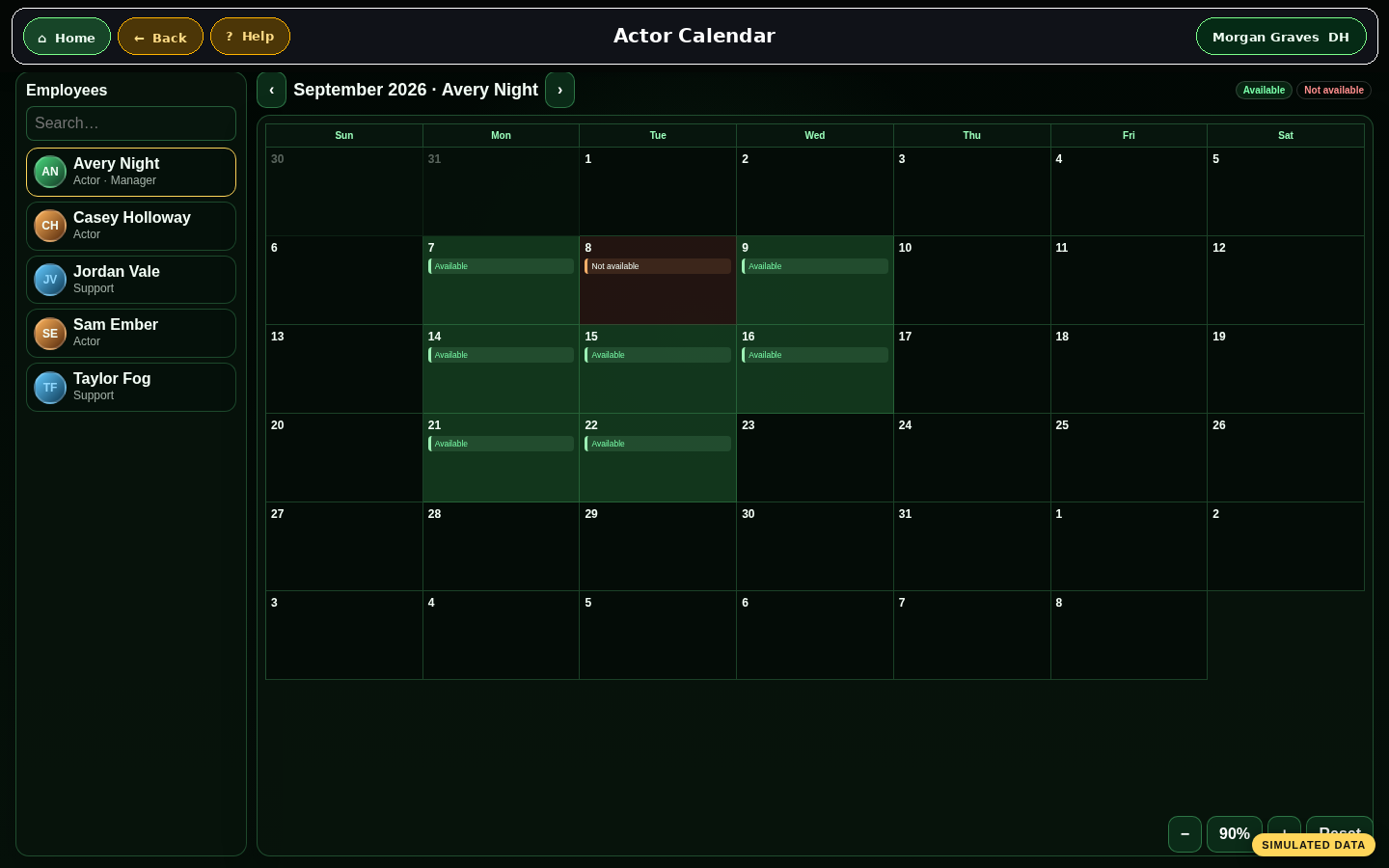
Employee calendarsThe night appears where employees can see events and record availability.
›
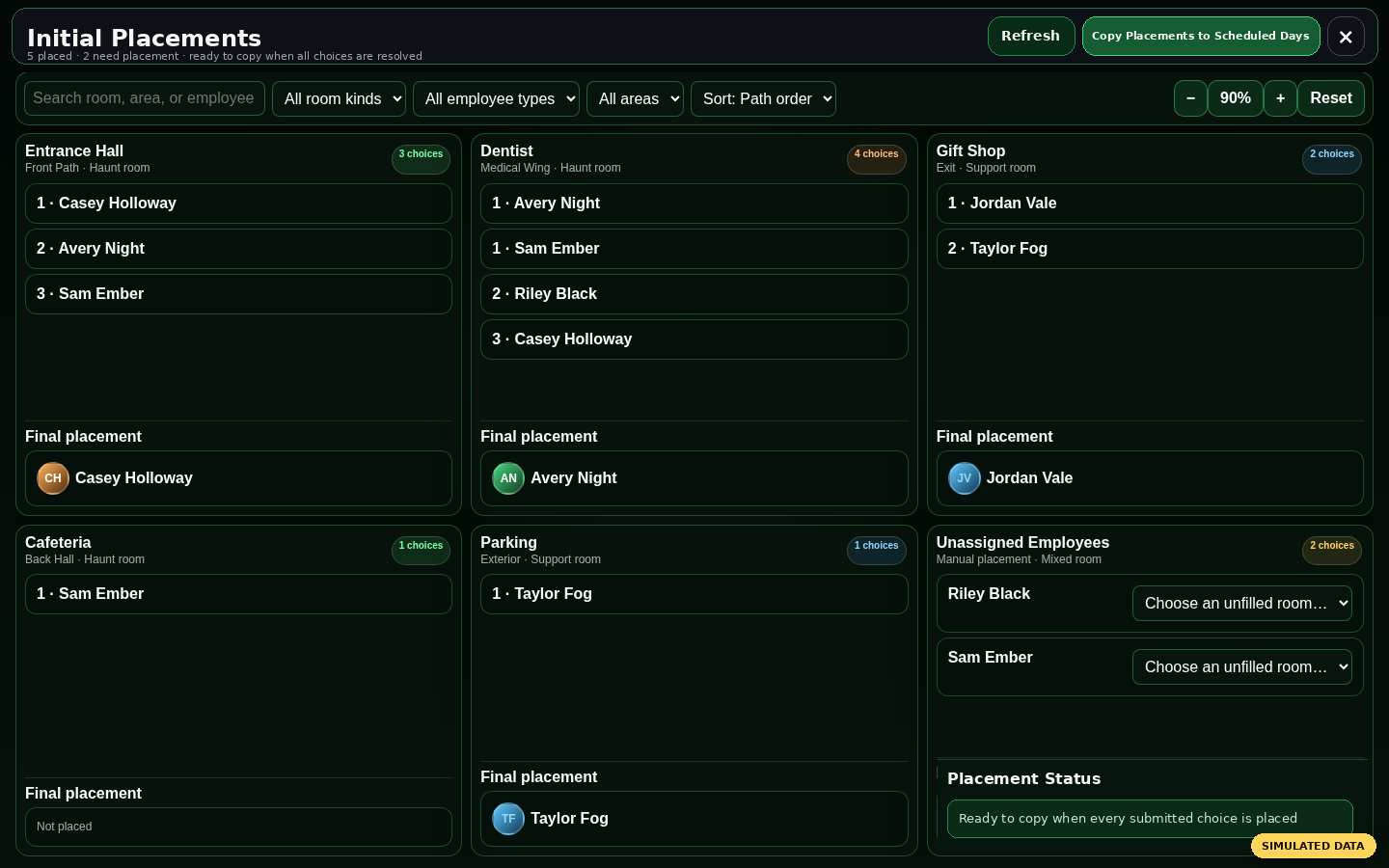
Room planningInitial placements and availability give schedulers a real starting point.
›
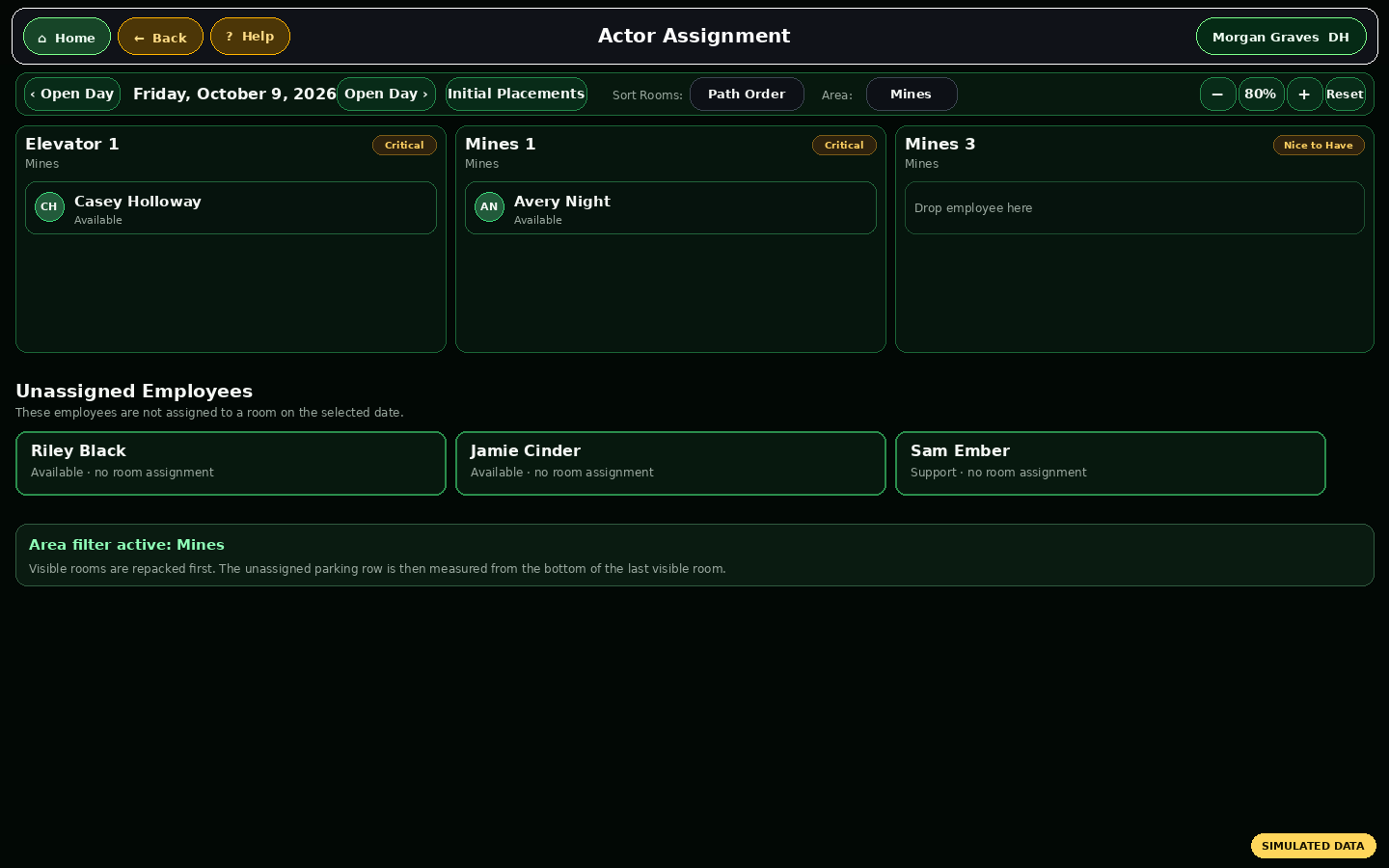
BodyDraggerManagers assign available people to the rooms that need them most.
›
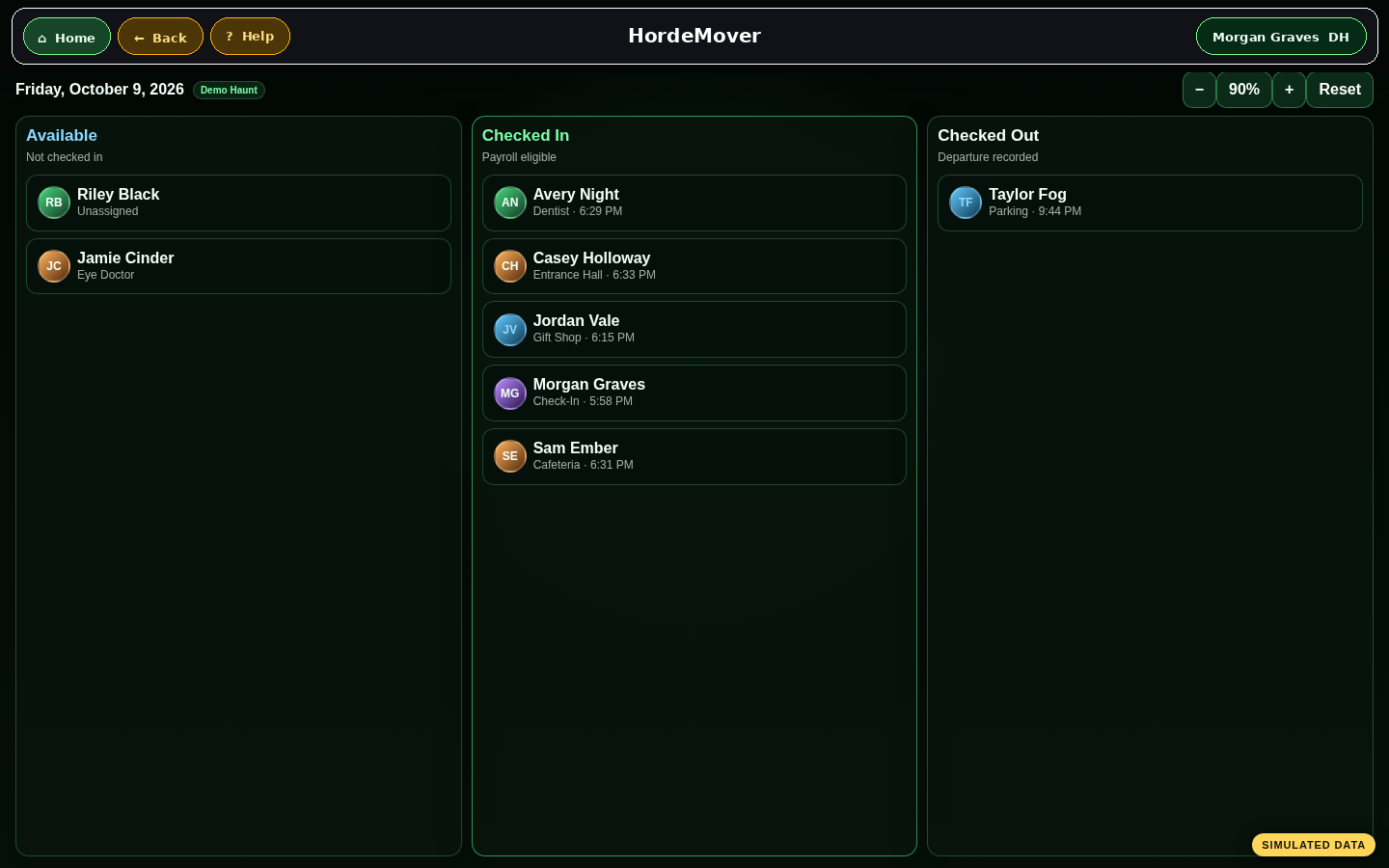
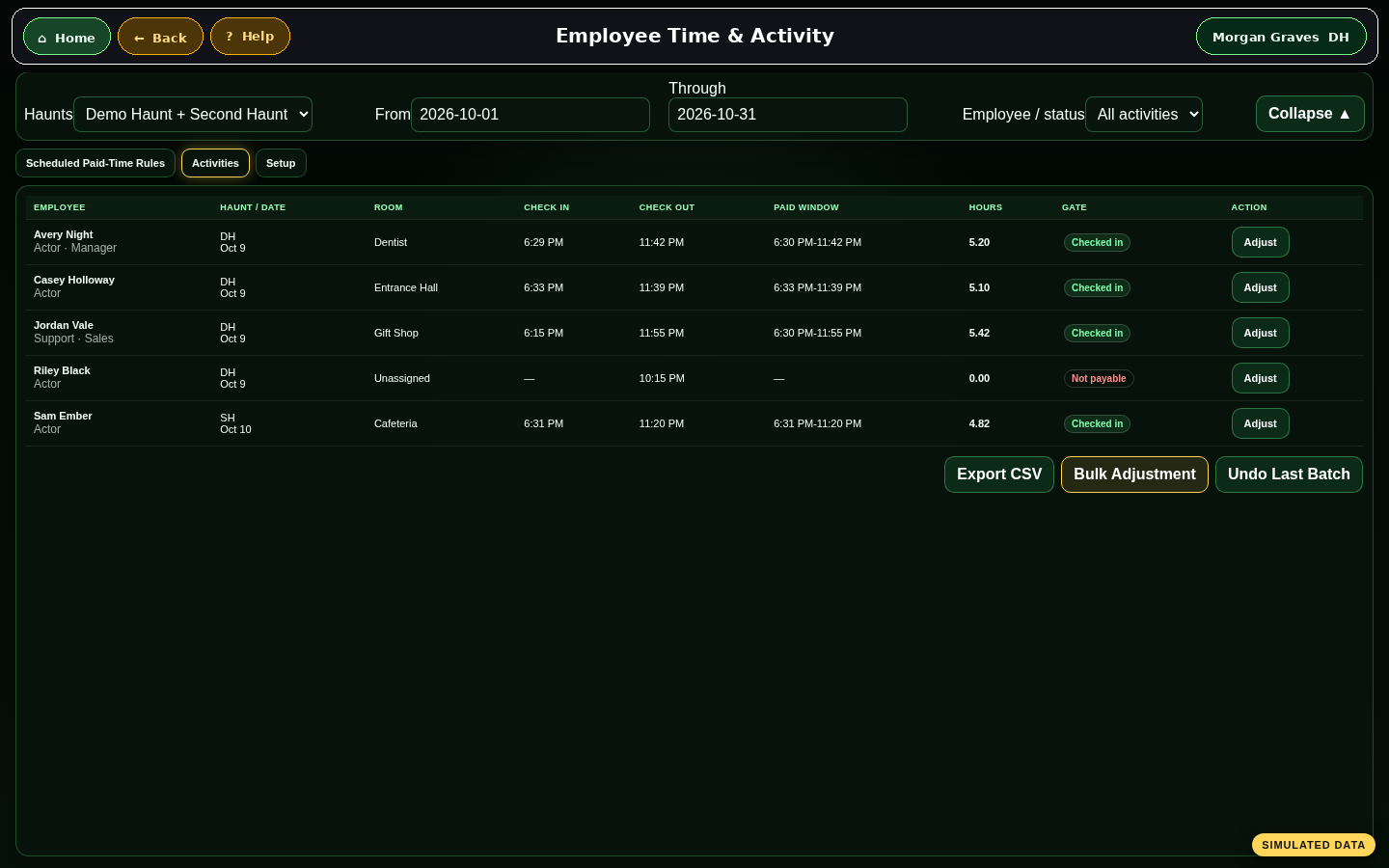
HordeMoverCheck-in and checkout turn the plan into live attendance and time records.
Public calendarsStaffing coveragePaid-time rulesEnd-of-night history
02
New employee journey
A person can travel from audition table to final checkout without being re-entered into disconnected systems.
1Audition / employee recordIdentity, phone, email, preferred communication, haunt membership
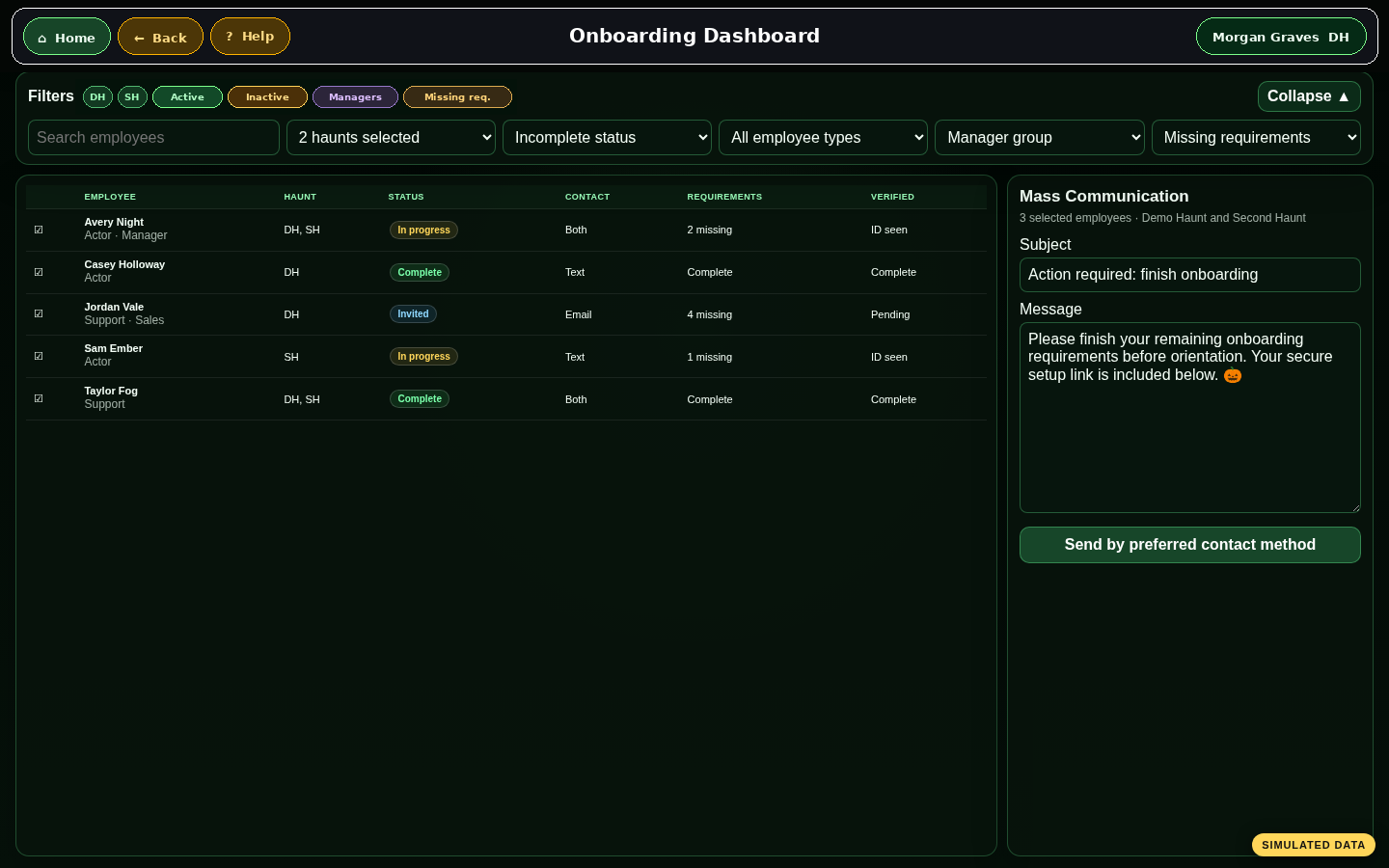
2OnboardingRequirements, forms, key dates, invitations, completion status
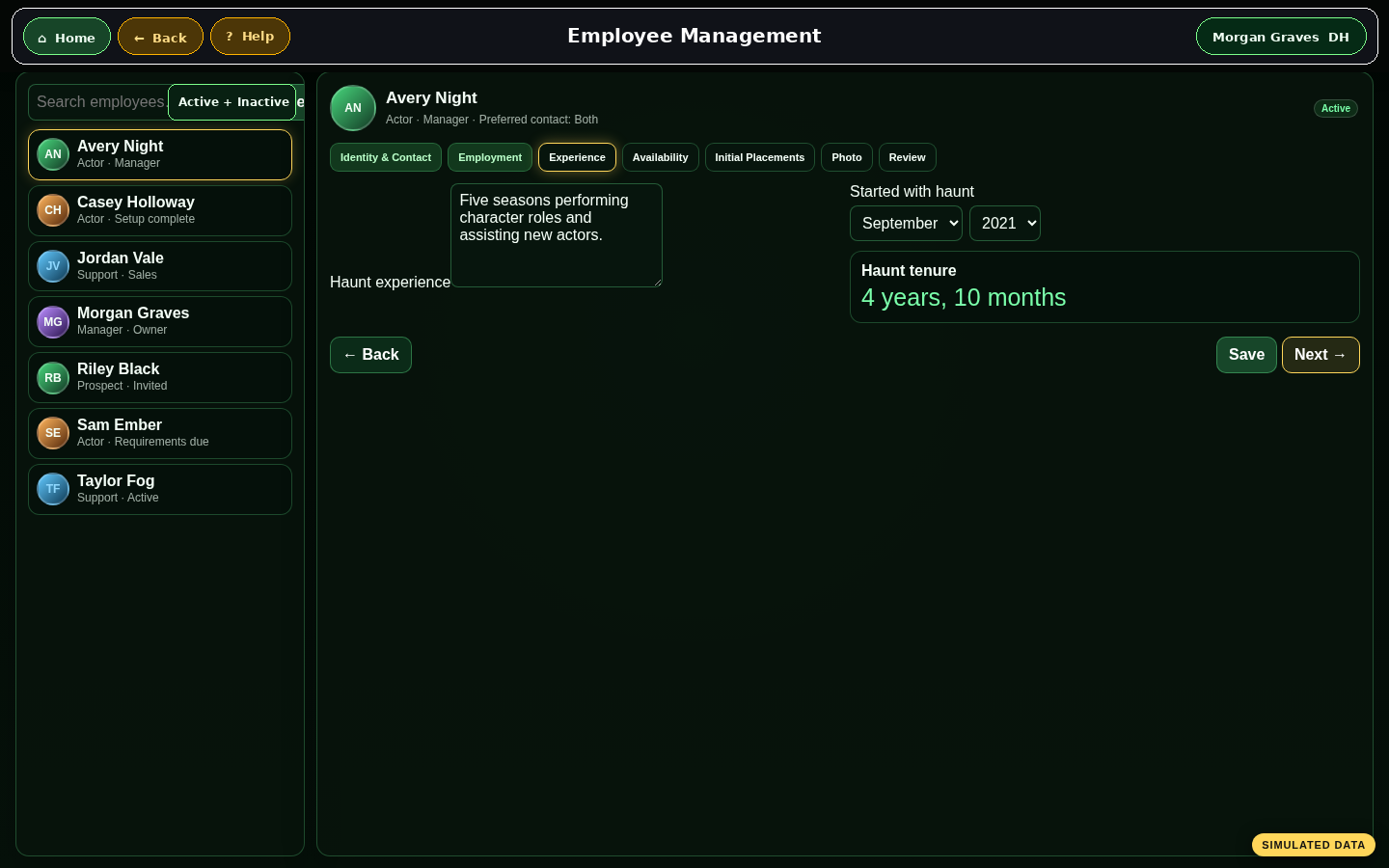
3PreferencesRoom choices, experience, availability, profile photo
4Initial placementManagers turn preferences into a season starting room
5Nightly assignmentAvailability and room priorities guide the final schedule
6Check-in to checkoutStatus, attendance, time, and activity remain connected to the same person
03
Guest journey from sale to scream
Front-of-house modules share the operational context needed to sell, queue, display, and dispatch guests.
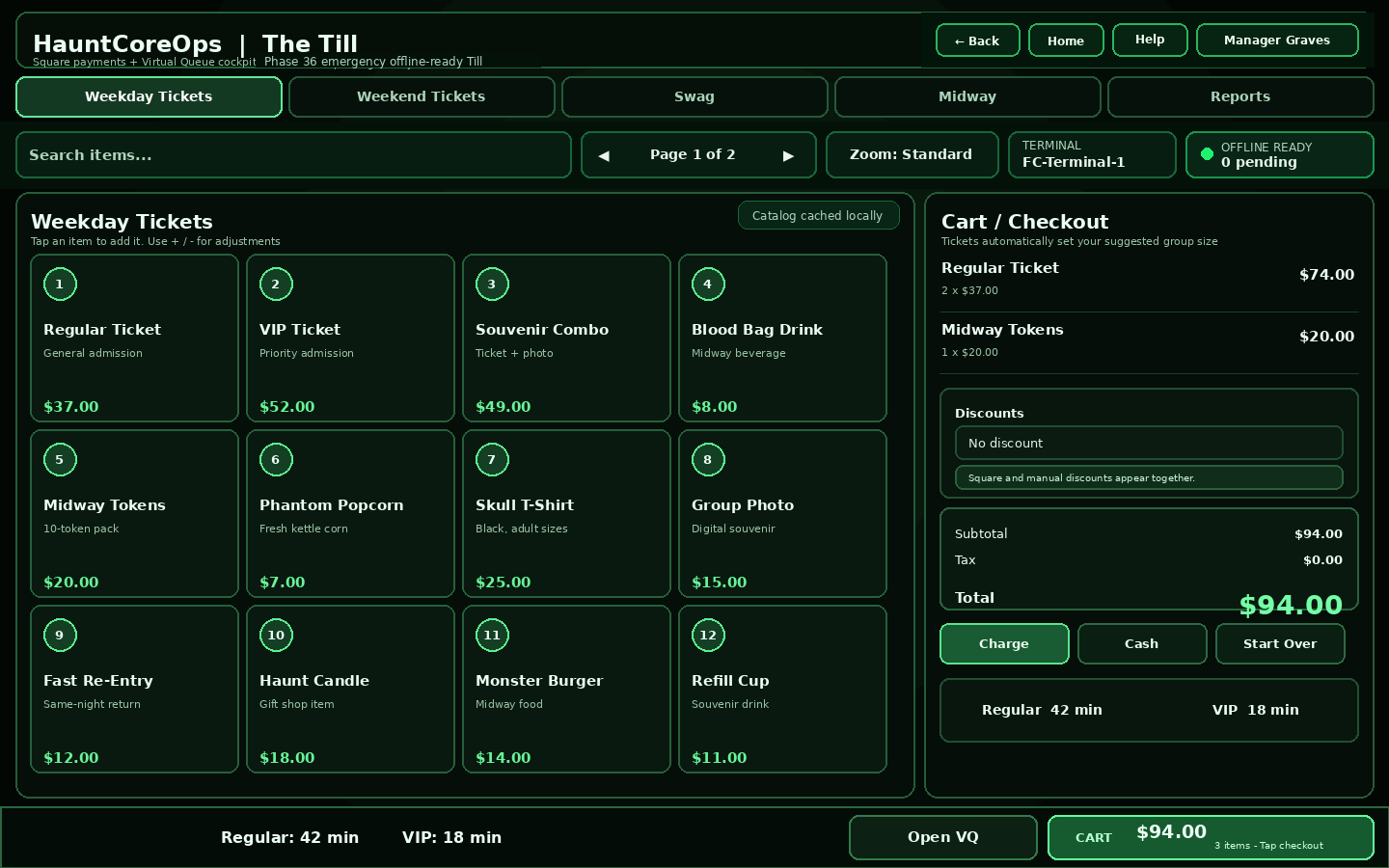
$The TillTickets, Midway, merchandise, discounts, Square, cash
›
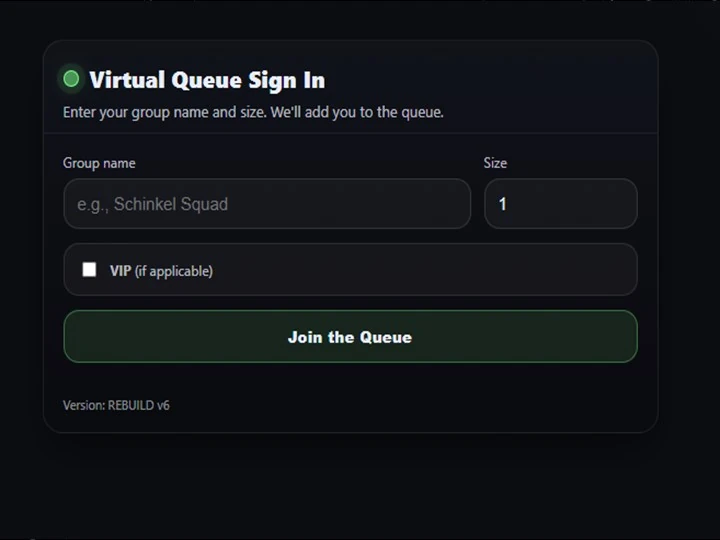
#Virtual Queue signupCreate a group or merge a purchase into an existing group
›
◷Wait calculationRegular and VIP flow stay visible to staff and guests
›
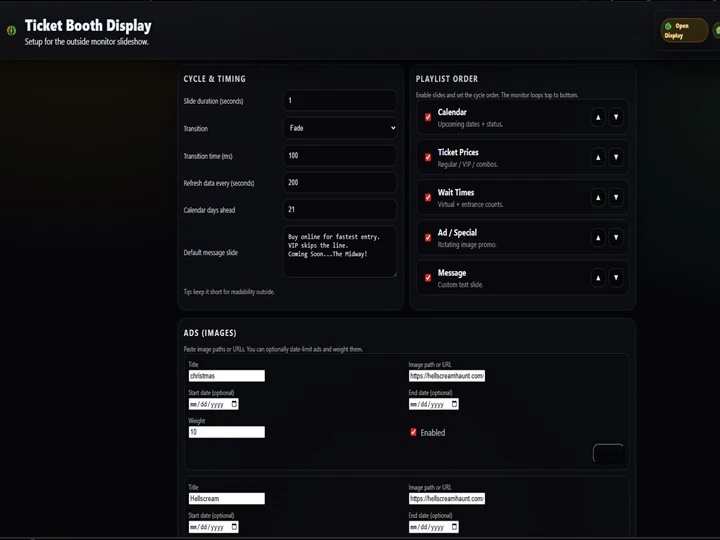
▣DisplaysTicket booth and queue screens communicate the live state
›
✓Dispatch and reportsAdmit groups, preserve history, and review the night